


Trusting God When Life Doesn't Go as Planned: Lessons from Exodus

Life doesn't always go according to plan.
Perhaps you thought by now you would be married, financially secure, retired, settled into your calling, or simply enjoying a season of peace. Instead, you find yourself navigating grief, rebuilding after burnout, caring for aging parents, facing a health challenge, struggling financially, or beginning again in ways you never anticipated.
Most of us have experienced seasons when God's direction did not make sense. We prayed. We sought His will. We tried to be faithful. Yet the road before us looked nothing like we expected. If we are honest, there are moments when we quietly wonder, Lord, what are You doing? Why is this taking so long? Why does it feel like my life isn't going as planned?
I suspect most of us have wrestled with those questions at some point. I know I have.
Looking back over my own life, I can identify seasons marked by unexpected detours, delays, disappointments, and closed doors. While living through those experiences, I often struggled to understand what God was doing. I wanted clarity, progress, and answers.
Instead, I found myself walking roads I never would have chosen. Years later, I can see that many of those very seasons shaped my faith, deepened my dependence on God, and formed me in ways that comfort and ease never could. Perhaps that is why I love the story of the Israelites leaving Egypt. Because God intentionally led them the long way.
Why God Led Israel the Long Way
Exodus 13 records Israel's dramatic departure from Egypt after more than four hundred years of slavery. Finally, they were free. One might assume that God would lead them by the shortest and most direct route to the Promised Land. Instead, Scripture tells us:
"When Pharaoh finally let the people go, God did not lead them along the main road that runs through Philistine territory, even though that was the shortest route to the Promised Land. God said, 'If the people are faced with a battle, they might change their minds and return to Egypt.' So God led them in a roundabout way through the wilderness toward the Red Sea. Thus the Israelites left Egypt like an army ready for battle." (Exodus 13:17-18, NLT)
You can read the full account in Exodus 13 and 14 here
The shortest route would have taken only a matter of weeks. God deliberately chose a longer and more difficult path because He understood something about His people that they did not yet understand about themselves.

They had left Egypt physically, but Egypt had not yet left them.
The wilderness was never simply about getting Israel from Egypt to the Promised Land. God was not merely changing their location; He was transforming their hearts, minds, and identity.
After centuries in Egypt, slavery had shaped the way the Israelites viewed themselves, others, and even God. Although they were physically free, they still thought like slaves. Their instinct in moments of uncertainty was to look backward rather than forward. When hardship arose, they repeatedly longed to return to Egypt because, as painful as slavery had been, it was familiar. Freedom required trust, and trust was something they had not yet learned.
Even When Life Doesn't Go as Planned, God Doesn't Leave Us
Many of us carry similar mindsets.
We may struggle with a scarcity mindset, believing there will never be enough—enough money, enough opportunities, enough time, enough provision. Others carry a poverty mindset, assuming that abundance and blessing are reserved for other people but not for them. Some of us live with a performance mindset, believing our value depends on our accomplishments, productivity, or ability to keep everything together.
Still others wrestle with fear, constantly anticipating loss, failure, rejection, or disappointment. Some carry shame and continue to define themselves by their mistakes, past experiences, or perceived inadequacies rather than by God's truth. Many of us function from an orphan mindset, living as though we are alone and solely responsible for securing our future, even though Scripture reminds us that we have been adopted as sons and daughters of God.
The Mindsets God Was Working to Change
The wilderness often exposes these hidden beliefs.
When the Israelites lacked food, fear surfaced. When they encountered obstacles, they discovered how deeply they still depended on human systems rather than God's provision. When Moses delayed returning from Mount Sinai, they revealed how quickly they reverted to old patterns of control and idolatry. Again and again, the wilderness uncovered what had been residing in their hearts all along.
The same is true for us. Seasons of uncertainty reveal the beliefs and assumptions quietly governing our lives. The wilderness exposes what is in our hearts, not so God can condemn us, but so He can heal, strengthen, and transform us. God's goal is not simply to lead us somewhere new. His goal is to make us into new people.
As we discussed in our article, "Why You Can't Stick to Healthy Habits," lasting change often requires transformation at the level of identity rather than simply changing our behaviors. True and lasting change begins when God reshapes the way we think, believe, and see ourselves.
Why Does God Allow Delays?
One of the most comforting truths in this passage is that God saw what Israel could not.
Exodus 13 tells us that God chose the longer route because if the Israelites encountered war too soon, they would lose heart and return to Egypt. God knew His people were not ready for certain battles. The detour was not punishment. It was protection.
How many times have we lamented a closed door only to realize later that God was preserving us from something we could not yet see? How many disappointments eventually revealed themselves to be mercies? How many delays were actually seasons of preparation?
As parents, we understand this instinct. We do not hand our children responsibilities they are not yet prepared to manage. Instead, we gradually equip and strengthen them. Our heavenly Father does the same. Sometimes God takes us the longer route because He loves us too much to expose us prematurely to circumstances that would overwhelm us.
God's Delays Are Often God's Protection
Scripture repeatedly reminds us that God sees what we cannot. His perspective extends beyond our present circumstances and immediate desires. What feels like a delay to us may actually be God's loving protection.
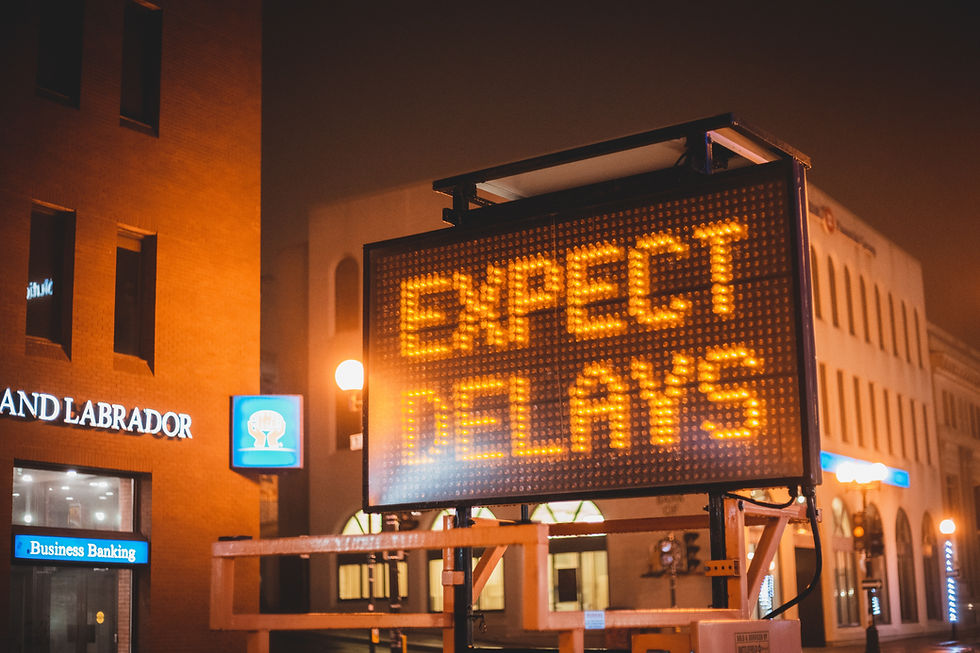
Many of us can look back on our lives and identify relationships that did not work out, opportunities that never materialized, or plans that unexpectedly changed. While these experiences often brought disappointment at the time, hindsight sometimes reveals God's wisdom and kindness.
Trusting God's timing does not always come naturally. Yet faith invites us to believe that God is working even when we cannot yet see the full picture.
Trusting God in Difficult Seasons
Immediately after describing the detour, Scripture tells us:
"By day the LORD went ahead of them in a pillar of cloud to guide them on their way and by night in a pillar of fire to give them light" (Exodus 13:21, NIV).
God did not reroute His people and then abandon them. He went with them. Every step of the journey was marked by His presence. The cloud never departed. The fire never left.
The wilderness was difficult, but it was never God-forsaken.
Many of us assume that if life feels hard or confusing, God must be distant. Yet Scripture repeatedly demonstrates that some of our deepest experiences of God's presence occur in the wilderness. Many believers can testify that seasons they never would have chosen became the very places where they encountered God most intimately.
God's Presence in the Wilderness
The valley often becomes the classroom where we learn to trust God in new ways. Difficult seasons can deepen our dependence on Him, strengthen our faith, and remind us that our hope rests not in circumstances but in God's unchanging character.
If you are currently walking through a wilderness season, take heart. The God who led Israel by cloud and fire still leads His people today.
When God Leads Us to Apparent Dead Ends
The story becomes even more remarkable in Exodus 14.
God instructs Israel to camp near the Red Sea. From a human perspective, this appears to be terrible strategy. The sea lies before them. Mountains surround them. Pharaoh's army approaches from behind. The people are trapped.
Yet God tells Moses beforehand:
"I will gain glory for myself through Pharaoh and all his army, and the Egyptians will know that I am the LORD" (Exodus 14:4, NIV).

The apparent dead end was not an accident. It was part of God's plan.
Israel saw a crisis. God saw an opportunity to reveal His glory.
How often do we experience the same tension? We look at our circumstances and see impossibility, while God sees an opportunity for revelation. We see delay, while God sees preparation. We see loss, while God sees transformation. We see a dead end, while God prepares to demonstrate His faithfulness.
Sometimes God leads us into situations where only He can deliver us so that when deliverance comes, we know beyond doubt that it was His hand at work.
How to Trust God When You Don't Understand His Plan
The wilderness was never wasted.
Deuteronomy 8:2 reflects on Israel's journey by saying:
"Remember how the LORD your God led you all the way in the wilderness these forty years, to humble and test you in order to know what was in your heart."
Read Deuteronomy 8 here
It took one night for God to get Israel out of Egypt. It took forty years to get Egypt out of Israel.
Transformation often takes longer than deliverance.
God can rescue us in a moment, yet formation frequently unfolds over years. The wilderness becomes the place where God dismantles old mindsets, heals old wounds, deepens trust, and teaches us to live as beloved sons and daughters rather than fearful slaves.
Perhaps you find yourself in a season that feels confusing, disappointing, or unexpectedly long. Perhaps you are wondering why life is not going according to plan.
Friend, the longer route does not mean you have missed God's will. The wilderness does not mean God has forgotten you. The detour may actually be evidence of His loving care and purposeful formation in your life.
God may be protecting you from battles you are not yet prepared to fight. He may be strengthening faith muscles you will need in a future season. He may be exposing beliefs and patterns that no longer serve His purposes for your life. Or perhaps He is preparing to reveal His glory in ways that would not have been possible on the shorter road.
The same God who led Israel by cloud and fire still leads His people today. His route may not always be the shortest, but it is always the right one.
So if you find yourself wondering why life is not going as planned, remember this: the God who leads you is also the God who goes with you. You can trust the Guide, even when you do not yet understand the road.
This Week's Invitation
Take a few quiet moments this week and ask yourself:
Where does it feel like life hasn't gone according to plan?
Rather than asking, "God, why am I here?" try asking, "God, what are You forming in me during this season?"
You may discover that what feels like a detour is actually preparing you for the Promised Land.
If you're struggling to navigate a difficult season, know that you don't have to walk alone. At Every Girl Living, we believe healing happens in the context of supportive relationships and community. We'd love to come alongside you on your journey.

Further Reading
References
American Psychological Association. (n.d.). Building your resilience. https://www.apa.org/topics/resilience
The Bible Project. (n.d.). Exodus overview. https://bibleproject.com/guides/book-of-exodus/
The Holy Bible, New International Version. (2011). Zondervan. https://www.biblegateway.com/
Willard, D. (2002). Renovation of the heart: Putting on the character of Christ. NavPress.
Wright, C. J. H. (2008). Knowing Jesus through the Old Testament (2nd ed.). IVP Academic.


Comments